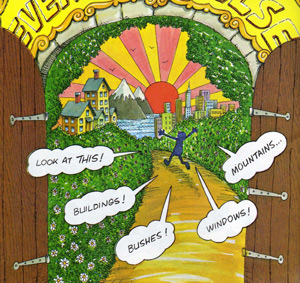
Every truth has four corners: as a teacher I give you one corner, and it is for you to find the other three. Confucius

23 May 2017

Our Learning Approach Now

Hi Everyone,


I've been having a look at past posts of this blog and thought it was time I shared how we are covering the Curriculum Learning Areas these days. 


The way the kids are learning has changed due to Jay and Freida getting older and seeking more formal learning opportunities. As a homeschooling parent, I am philosophically in tune with an eclectic/natural learning approach, I believe in a variety of equal intelligences (Howard Gardner) and don't push bookwork. Having said this, our children are enjoying a school at home approach as a regular part of our schooling. As a family we love books so maybe that's enough motivation to want to learn grammatical rules, and building the chook house is reason enough to learn to multiply on paper, who knows why and I guess it doesn't really matter.

What I did learn from Alexandra (our eldest now at university) was that if you don't at least offer the alternative of standardised work, particularly in English and Maths, homeschool kids can become anxious that they're not up to the same level academically as their school going peers.

Invariably I have found over the years that homeschool kids are at least as intelligent and proficient as kids who attend school but regardless this concern tends to arise from tween/teen aged children and is a very real and important issue to some kids. No matter what your philosophies may be as a parent, sometimes children just feel what they feel and it's our job to honour that. I guess my lesson in all of this is to accept that natural learning is rolling with your kids' preferred style at any given moment and if that's a bit formal, so be it.

Personally I have never felt the need to go down the NAPLAN route, but I am now comfortable with giving my children some formal texts if that's what they want and enjoy. I simply act as a resource to facilitate their learning while they're using their work books. I never obviously monitor what they're doing, and I only help out if they ask or appear frustrated, other than that I hang around reading or whatever while they get on with the business of learning.

I will look at specific learning areas in future posts, based loosely around the Australian Curriculum Standards as that's what we are asked to use as a framework for the homeschool review process here in Australia. I will detail our curriculum and resources, referring back to past posts to tie in earlier/foundation learning with what we are doing now.

Talk Soon, Cynthia x


21 May 2017

Working and Homeschooling


Hello Everyone,


Today I'm talking about my experiences as a working (outside of the home) and a work at home homeschooling parent. It's a bit of a loaded topic but as I have done both I'm comfortable commenting on the subject for the sake of sharing my experiences :)

When Alexandra (now 20) was young I was a sole parent and lucky enough to work in an industry that supported me taking her to work with me from the age of 9 months, once I felt able and impoverished enough to return to the workforce. I also worked fairly late into my pregnancy so the physical/mental transition back to work wasn't a huge wrench.

Taking Alex to work with me went relatively smoothly until she started school, when I just altered my work hours to accommodate her school day. I remarried not long after this and arrangements went fairly smoothly until problems at school started and worsened over the course of several years, putting a strain on us all emotionally and until we decided to school Alexandra at home.

In the meantime, we welcomed Jay into the family unit, and he was a toddler by the time we withdrew Alex from school.  I was mainly at home, doing occasional relief days at work when my husband was available to look after the kids.  I left work within the first few months of homeschooling Alex, where I remained for nearly ten years, until Freida was six and Jay was nine.

I'm telling all of this to illustrate the diverse nature of homeschooling families, we're not all two parent married forever units with a massive single income. There are plenty of those, as are there plenty of awesome single mums and dads, blended families, and low income couples meandering the homeschooling path these days.

I returned to work a couple of years ago, to do the kind of work I felt driven to do, in child protection. The intensity of this work really stretched me emotionally and physically and I'm not sure how I managed to do it for over two years and continue with homeschooling outside of an amazing support network and equally amazing, humble, compassionate kids at home who got my intentions and understood my fatigue and stayed on task as learners. I think the outsourcing of dance, drama, scouts and science facilitated our natural learning style.  It also meant that the demands of my work schedule didn't impact too heavily on the children's ability to learn from people more knowledgeable and talented than me in their areas of expertise, and allowed them to have fun with other kids.

I have since stepped back from work and will take time to focus on homeschooling while my kids are young, but they don't see my years at work as damaging or torturous as my guilt at being an 'absent' parent would trick me into believing. When I mentioned my tiredness, thinking I was the most impatient, negligent homeschooling parent ever they would look at me quizzically and say "it's fine Mum" and as they appear happy and content I just have to believe them.

Fortunately, I had the option to alter our lifestyle to accommodate being at home with our kids, and most homeschoolers I know are proficient at adapting their outgoings to suit a one income wage bracket. However, not everyone has the option to homeschool without working, nor do they necessarily want to. The camaraderie, feeling of achievement and  joy of working keeps many people in the workforce by choice.

Working as a parent (especially a primary carer) can be guilt inducing though. Especially working as a homeschool parent, in my experience, can leave you feeling as if you are in a definite minority group.  I think this will lessen generally over time as more people choose to homeschool and society caters more for homeschooled kids and their families who need/choose to work.

I know of several workplaces where companies have a kids room set up for employees where there is a lounge, computer, air hockey, pool table etc where older kids can spend a few hours to a day a week hanging out and allowing both parents to work guilt free for a limited time. This is still definitely rare but is becoming more common all the time.


As for being a stay at home parent again, I am loving the natural rhythm of our days. We are generally more relaxed and are finding time between activities to chat about what is going on in ours and the wider world. We are able to decide each day what we feel drawn to do, and after several years of a fairly closely timetabled life, my appreciation for free time as a family unit is massive.

I have a renewed respect for those courageous souls who continue to homeschool while working outside of the home as well as those committed stay at home parents who face the question 'so what do you do?'  on a regular basis. I have an appreciation for the many different forms that homeschooling families take and a renewed desire to not judge anyone's journey. I have hope for a future more accommodating to working families and their children as homeschooling continues to grow in popularity.

Right now though, I'm off for a hike at our local conservation park with my beautiful children, just because we feel like it :)

Talk Soon, Cynthia x


19 May 2017

Trusting the Process: When an Eldest Homeschooling Child Leaves the Nest..........


Hello Everyone.


Well the time has come for our eldest child Alex to fly the nest and head off to the UK for two years of study and work. We homeschooled our girl from nine years of age when school just wasn't gelling for her, and what a journey it has been since. From those first tentative years of homeschooling when she was strongly attached, a bit quiet in groups and unsure of herself to now, a beautiful young woman, studying at university, earning her own money and ready to travel to the other side of the world to open the next chapter of her life.

The sadness I feel at losing the company of my daughter and my friend for a couple of years is (almost) compensated for by the joy I feel for her excitement and courage. What an endorsement for the potential of homeschooling a child in a close and loving environment.

At the begining of our homeschooling journey I was warned by various people that "you can't protect her from life's bumps" or "she will never develop resilience if you remove her from school" etc. After leaving school there was an initial period of anxiety created by several factors but I firmly believe this lessened because she had the time and space to find her own boundaries and utilise them. She has independently worked through the avenues required to enter brick (as opposed to online) university, study for several years and arrange a study swap to an international university, all the while working part time in hospitality as part of a team.

This does not fit with a common conception of homeschoolers as mollycoddled, over attached and lacking in motivation and social/life skills. We practised natural learning with Lex as she was a suitably curious, motivated learner, and I never did need to set an alarm for her to get up early to go to work or uni....go figure! Even our younger kids (now 8 and 12) set their own alarms for science, dance and drama class, or to feed their animals. All three kids enjoy the company of people of all ages, their friends and a laugh. We have our challenges, but overall in the 10+ years we've been homeschooling, we have resolutely decided that it works :)

Talk soon, Cynthia x

Those Who Trod the Path Before Us....

Hi Everyone,

Link
I have been thinking about the origins of homeschooling, the changes it has seen in recent history, and the people who caused these changes to happen .
Homeschooling your children was once the norm because the majority of children stayed at home. They learned within the company of their family and wider community and grew into mostly well functioning, intelligent adults.

Over the past hundred and fifty years, schools have appeared, become entrenched in our society and finally insisted on compulsory attendance for all children.This state of affairs was pretty much accepted as the best thing for the children until fairly recently when parents started questioning the status quo.

Homeschooling has experienced a resurgence in popularity as more parents are considering it as a viable education option. As word of the benefits of homeschooling spreads, so does the number of courageous families taking the plunge and setting out to homeschool.


The homeschooling journey for our family was one which gradually resonated and became entrenched into our lives. My experience has been one of community and sharing of knowledge and resources. I will be forever grateful to the experienced homeschooling parents who patiently answered my endless questions about hs and how they functioned within the system.

I am particularly grateful to those who exposed me to natural learning as a genuine alternative to a formal curriculum. Eleven years ago when we began homeschooling, natural learning was difficult and took a lot of faith and self belief to stick with, and if it wasn't for the generous sharing of information and resources by an experienced few friends, I would still be floundering, trying to work out what is the best route for us, I am sure.


Authors and free thinkers such as John Holt, John Taylor Gatto, Linda Dobson also expanded my thinking and knowledge base around homeschooling. And of course in Australia, Beverley Payne and her comprehensive website and constant input that has helped so many fledgling families find their homeschooling feet.
So remember the importance of sharing your experiences....they really do help those who come after us :)

Talk Soon, Cynthia x

03 February 2014

Assessment

Hello,
Today I will talk about assessment, grading, results, feedback, whatever you choose to call it. I have returned to tertiary study in a subject I dearly love (visual art) and I LOVE the process of reading, learning, preparing for and executing a response in written form to a test, essay or whatever is required. What I don't enjoy is having someone else pulling it to pieces positive or negative.If you would like to see a little of my genteel word therapy whizz across to my writing blog to the poem entitled    A Beguiling Covenant.

These are not the rantings of a bitter student who can't keep up...the whole process just irks me. Even though the Alfie Kohn philosophy of intrinsic trust in the individual, and John Holt's reassurances to trust the learner to find what they need to learn has been ingrained after so many years of homeschooling, I found myself becoming anxious that my second essay wouldn't match the first grade. How would I keep it up?? Scary stuff to me as an adult, how do our kids handle it? I have talked to several of my daughters teenage friends and many felt the same as I did. It's not just kids who are struggling who dread the number at the top of the computer screen (yep,  2014 it's all electronic baby...I had to get my head around that too), it's the 'good' students who just don't want to fall below the imposed (self or external) benchmark of a 'good' grade.

 I do get the long term benefits of a tertiary degree and understand the necessity of doctors, nurses, pilots etc having testable knowledge for safety and performance reasons. I also get the value of discipline and sticking at a project until completion. What I don't get is the obsessive focus on formulaic detailing and paranoia about plagiarism and referencing. Yes, most ideas have been deconstructed and written about before...so what?? I wonder how our older kids can be creative in any academic sense when they're so terrified to play around with ideas in case somebody accuses them of 'cheating'...I thought it was called collation for individuals and in a group collaboration(??) Also, essay lengths have shrunk since I was last a uni student...easier you think, no it just means squeezing more evidence of concept and practical knowledge into fewer words...another pressure on our students.

On the other hand, I spoke to a 19 year old university student the other day who was raised in a wonderful natural learning environment until entering a specialised high school at 16years of age. She spoke of each stage of her education being "just right at the time". She loved the freedom to learn at her own pace in her younger childhood, then loved the challenge and delightful reward of entering formal education and earning acknowledgement after working hard on an assignment. She spoke of the value of constructive feedback, and generally helped to put it all beautifully in perspective for me. I must say I did feel a little bit pleased when she shared she hated referencing as much as me.

I will say today that I am still not crazy about the overemphasis on grades in many schools, I feel that they stifle creativity more than many people care to consider. I believe we are absolutely blessed to have the opportunity to homeschool or school our children in their childhood years and beyond  as we/they wish. I also concede that if a kid wants to go the school/tertiary route, their love of learning will not be crushed provided they are nurtured with a solid, gentle basis for learning in the formative years.

As for me, I have decided to read, write, submit and enjoy the process. I will aim for joyful learning, striving for my own indivdual best and role-model wholistic learning to my kids, rather than just banging on about it..that's the theory anyway.

Talk soon, Cynthia
Grover says it better than anyone...